Hospitality
Cafe Goodies
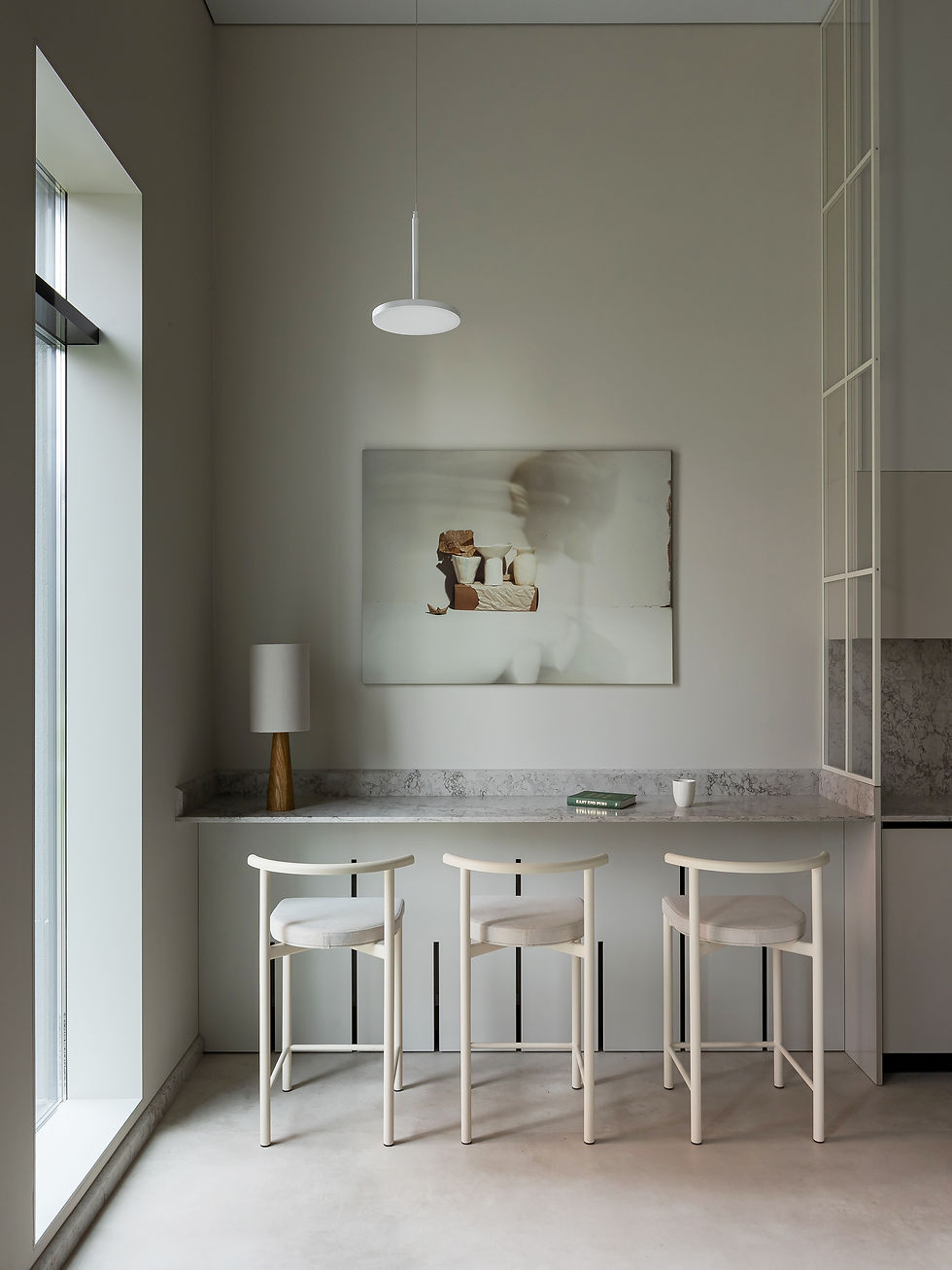
Our work on Cafe Goodies focuses on a soft, neutral palette to create a refined everyday environment. The design utilizes subtle vertical rhythms and lightweight furniture to avoid visual noise while adding architectural depth. We employed delicate pendant lighting to define intimate zones within an open and airy spatial configuration.
Clean architectural lines and minimal detailing define the space, while subtle vertical rhythms on the walls and counter fronts add depth without visual noise. Furniture is intentionally lightweight in appearance with rounded tables.
Lighting plays a central role in shaping the mood. Pendant lamps with delicate silhouettes float above the tables, creating intimate dining zones while maintaining an open, airy feeling throughout the café.
This café was conceived as a calm, refined space where light, texture, and simplicity work together to create an inviting everyday ritual. The design is rooted in a soft, neutral palette—warm whites, muted creams, and gentle beige tones.
Location: Minsk, Belarus
Photography: Sergey Ananiev
Style: Tatiana Guzik


Journal

Designing Hospitality Spaces that Foster Community in Historic Cities
In the heart of historic cities, from the cobbled streets of Minsk to the grand squares of Prague, the hospitality industry serves as a meeting point for locals and visitors. As architects and interior designers, our role is to create spaces that not only enhance the aesthetic appeal but also foster community, comfort, and a sense of belonging. This blog explores how modern design can coexist with historical context, creating inviting cafés, bars, and small hospitality venues that invite...

Materiality and Time: Choosing Finishes That Age Beautifully in Residential Projects
In residential design, the selection of materials is crucial to creating spaces that tell a story and age gracefully. For professionals in architecture and interior design, understanding the nuances of materiality can transform a home from simply a living space to a warm, inviting environment that resonates with its inhabitants. This philosophy is central to the work of Anna Lazar, a Minsk-based interior designer who blends modern aesthetics with a rich historical context, emphasizing natural...

The Psychology of Home: Designing Interiors That Feel Emotionally Safe
Creating a home goes beyond aesthetics; it’s about fostering an environment where emotional safety thrives. For interior designers like Anna Lazar, the goal is to design spaces that resonate with the user’s psyche. By grounding interior design in the science of psychology, especially aspects like spatial planning, light, acoustics, and tactility, we can create havens that not only look appealing but also provide a sense of calm and security. Spatial Planning: Layout that Nurtures Connection...

Adaptive Reuse of Historic Buildings: A Blend of History and Modern Design
The adaptive reuse of historic buildings has become an essential topic in the world of architecture and interior design. It is not merely about preservation but about breathing new life into spaces while respecting their historical significance. As we explore this subject, we will delve into how this philosophy informs the approach taken by Anna Lazar, a Minsk-based designer known for merging modern aesthetics with a deep appreciation for historical context. Understanding Adaptive Reuse...